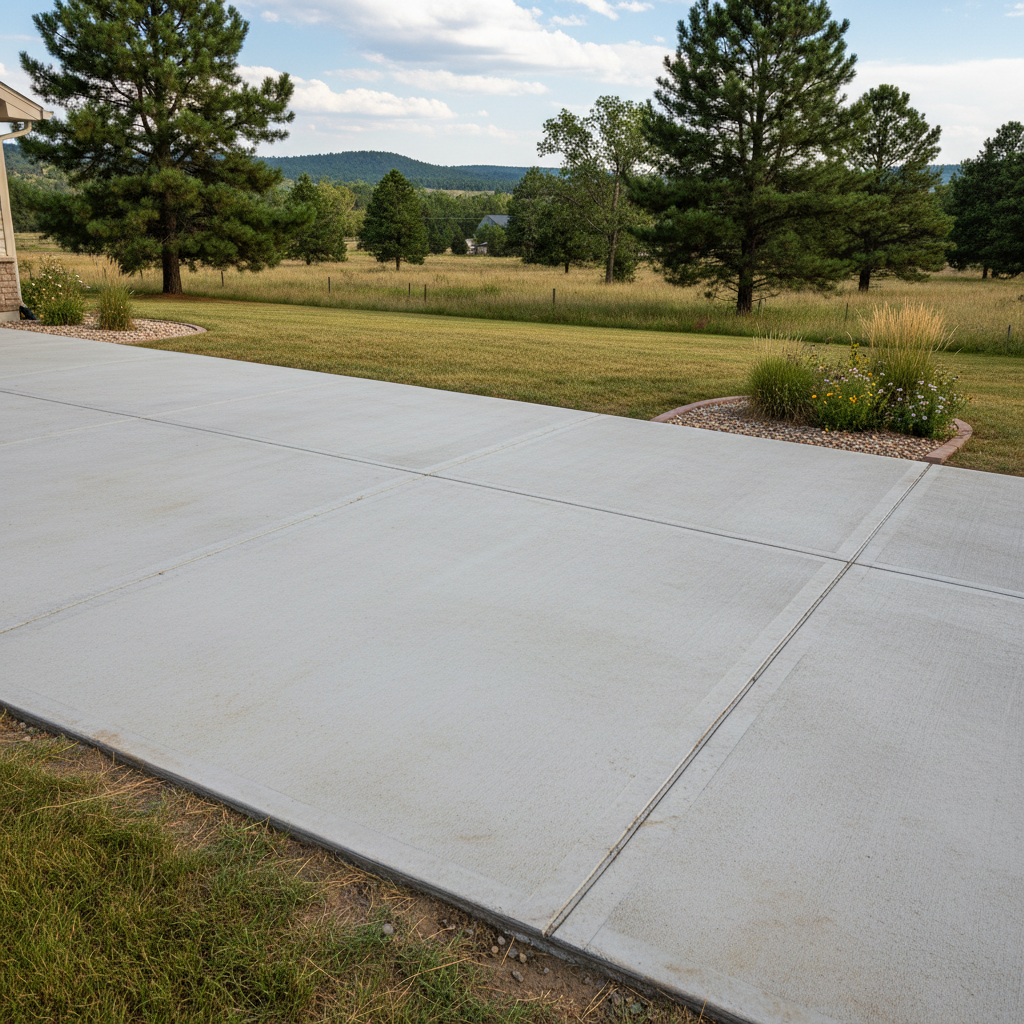
Winter around the Black Hills is very severe. If you have lived here through a proper Sturgis January, you already know what sub-zero temperatures and endless freeze-thaw cycles do to asphalt and concrete. One day the weather is fifty degrees and the next day we are buried in snow with ice packed deep into every crack. That moisture gets inside your slabs, expands when it freezes, and starts tearing things apart from the inside out.
Sturgis Concrete Inc sees plenty of driveways and patios that took a beating simply because minor maintenance got pushed off until next year. Here is how you keep your concrete holding strong without spending every weekend on chores.
Seal It Before the Snow Flies
Applying a quality penetrating sealer every couple of years is the single best thing you can do for your flatwork. It blocks out water and stops road salt from eating up the surface paste. Pick a dry weekend in early fall before the temperatures drop too low, sweep everything clean, and roll it on. It takes an afternoon and saves you thousands down the road.
Watch Out for the Warning Signs
Hairline cracks happen as concrete cures and settles, but you need to pay attention when they start opening up. If you notice one side of a joint sinking lower than the other, or if chunks of the surface start flaking off, which is known as spalling, you have an active problem. Water pooling against your foundation or right in the middle of a driveway is another red flag that the sub-base is washing out or shifting.
Smart Snow Removal Habits
Be careful what you throw on your walks when the ice hits. Rock salt and harsh chemical de-icers can pit the surface and ruin the finish, especially on newer pours. Use sand or safe ice melt instead. And keep an eye on your metal snow shovels or plow blades. Chipping away at frozen edges with a sharp metal edge will gouge out chunks faster than you would think.
When to Call in Backup
Some cracks you can fill yourself with a basic polyurethane caulk from the hardware store, but major settling is a different story. If a slab drops a couple of inches near your garage door or creates a tripping hazard on your front sidewalk, it is time to call a professional. Mudjacking, foam jacking, or tearing out and repouring are jobs that need proper equipment and experience to get the drainage right.
Taking care of your concrete does not have to be a full-time job. A little attention twice a year goes a long way toward keeping your property safe and looking solid through every season we get thrown our way.