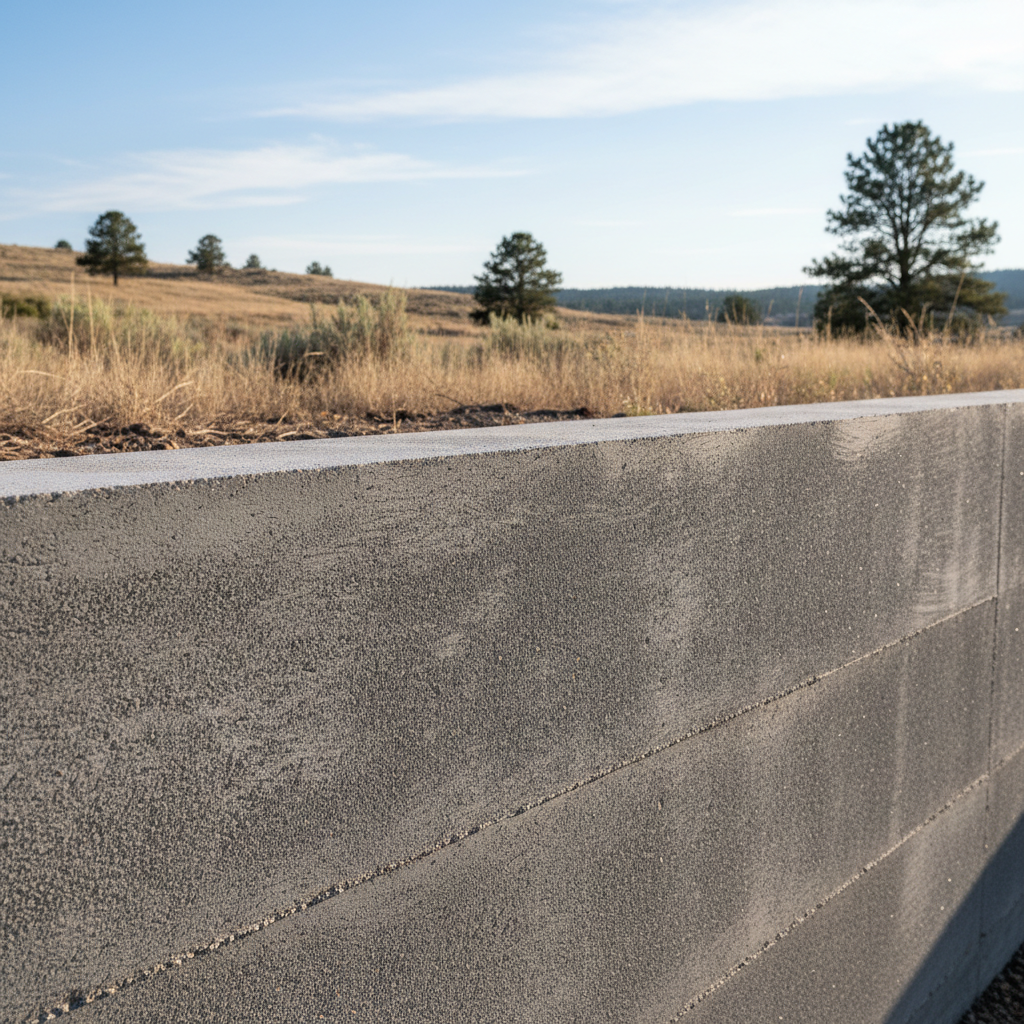
You're probably here because you've got a slope on your property that's driving you nuts, or maybe you're just looking to add some usable space to your yard. Whatever the reason, concrete retaining walls are a solid solution for a lot of Sturgis homeowners. I get asked a bunch of questions about these walls, so I figured I'd lay out the honest answers for you. No fancy marketing speak, just what I've seen and what you need to know.
What's the real benefit of a concrete retaining wall?
Look, the biggest benefit is pretty simple: they hold back dirt. If you've got a hill that's eroding, or you want to create a flat area where there used to be a slope, a retaining wall does the job. It prevents soil erosion, manages water runoff – which is a big deal around here with our spring thaws and heavy summer rains – and can really open up your yard for landscaping, patios, or even just a level spot for the kids to play. They're built to last, too, especially compared to some other options out there. You build it right once, and you won't be thinking about it again for decades.
How do I know if I even need one?
That's a good question, and honestly, sometimes you don't. But if you're seeing soil washing away after a good rain, or if your yard has a steep grade that's hard to mow or use, then yeah, you probably need one. Another common reason is if you're building a new patio or driveway and need to create a level base where there isn't one naturally. Or maybe you just want to add some tiered garden beds. If you're unsure, give us a call at Sturgis Concrete Inc. We can come out, take a look at your property, and tell you straight up if a wall makes sense for your situation.
What's the difference between concrete block and poured concrete?
This is where things can get a little confusing for folks. When I say 'concrete retaining wall,' most people picture those interlocking concrete blocks. Those are called segmental retaining walls (SRWs), and they're great for a lot of applications, especially for shorter walls or curves. They're often dry-stacked, meaning no mortar, and rely on their weight and interlocking design to hold the soil. Then you've got poured concrete walls. These are typically reinforced with rebar and are much stronger, built to handle bigger loads and taller heights. We form them on site and pour the concrete directly into the forms. They're usually more expensive up front, but for serious structural needs, they're the way to go. It really depends on the height of the wall, the soil conditions, and what kind of load it needs to bear.
Do I need a permit for a retaining wall in Sturgis?
You bet you might. This isn't something you want to skip. Generally, if a retaining wall is over four feet tall, measured from the bottom of the footing to the top of the wall, you'll need a permit from the city or county. Even if it's shorter, if it's supporting a structure or is part of a larger project, you might still need one. There are also rules about setbacks from property lines and easements. Trust me, getting caught without a permit can lead to fines, or worse, having to tear down a wall you just built. Always check with the City of Sturgis Planning and Zoning Department before you start any big project like this. It saves a lot of headaches down the road.
How long do these walls actually last?
A properly built concrete retaining wall, whether it's poured or a well-engineered block system, should last you a very, very long time. We're talking decades. Poured concrete walls, especially, can easily last 50 to 100 years or more if they're designed and installed correctly, with good drainage and proper reinforcement. The key word there is 'properly.' If you skimp on the foundation, don't use enough rebar, or ignore drainage, you're asking for trouble. That's why hiring an experienced contractor like Sturgis Concrete Inc. is so important. We know the local soil conditions – like that heavy clay we often find around the Fort Meade area – and we know what it takes to build a wall that stands the test of time against our freeze-thaw cycles.
What about drainage? Is that really that important?
Absolutely. Drainage isn't just important; it's critical. It's probably the single most common reason why retaining walls fail. Water builds up behind the wall, creating hydrostatic pressure, and that pressure can push even a well-built wall right over. We always install a drainage system behind the wall, usually a perforated pipe (a 'French drain') surrounded by gravel, which directs the water away. We also use weep holes in some designs to let water escape. If you don't manage the water, you're setting yourself up for a collapsed wall, guaranteed. Don't let anyone tell you drainage isn't a big deal; they don't know what they're talking about.
What's the typical cost for a concrete retaining wall?
Alright, the million-dollar question. The cost varies a lot, honestly. It depends on the height and length of the wall, whether it's poured concrete or block, the accessibility of your site, the soil conditions, and how much excavation and backfill is needed. Poured concrete is generally more expensive per linear foot than block, but it offers superior strength for bigger jobs. You're looking at anywhere from $40 to $100+ per square foot of wall face, sometimes more for really complex projects. That includes materials, labor, excavation, and drainage. My best advice? Get a detailed quote from a reputable local contractor. We'll come out, assess your specific situation, and give you a clear breakdown so you know exactly what you're paying for. Don't just go for the cheapest bid; a cheap wall often means a cheap job, and that'll cost you more in the long run when it fails.
Hopefully, that clears up some of the common questions you might have about concrete retaining walls. They're a big investment, but a good one that adds value and functionality to your property. If you're in Sturgis or the surrounding Black Hills and thinking about a wall, give us a shout. We're here to help you get it done right.