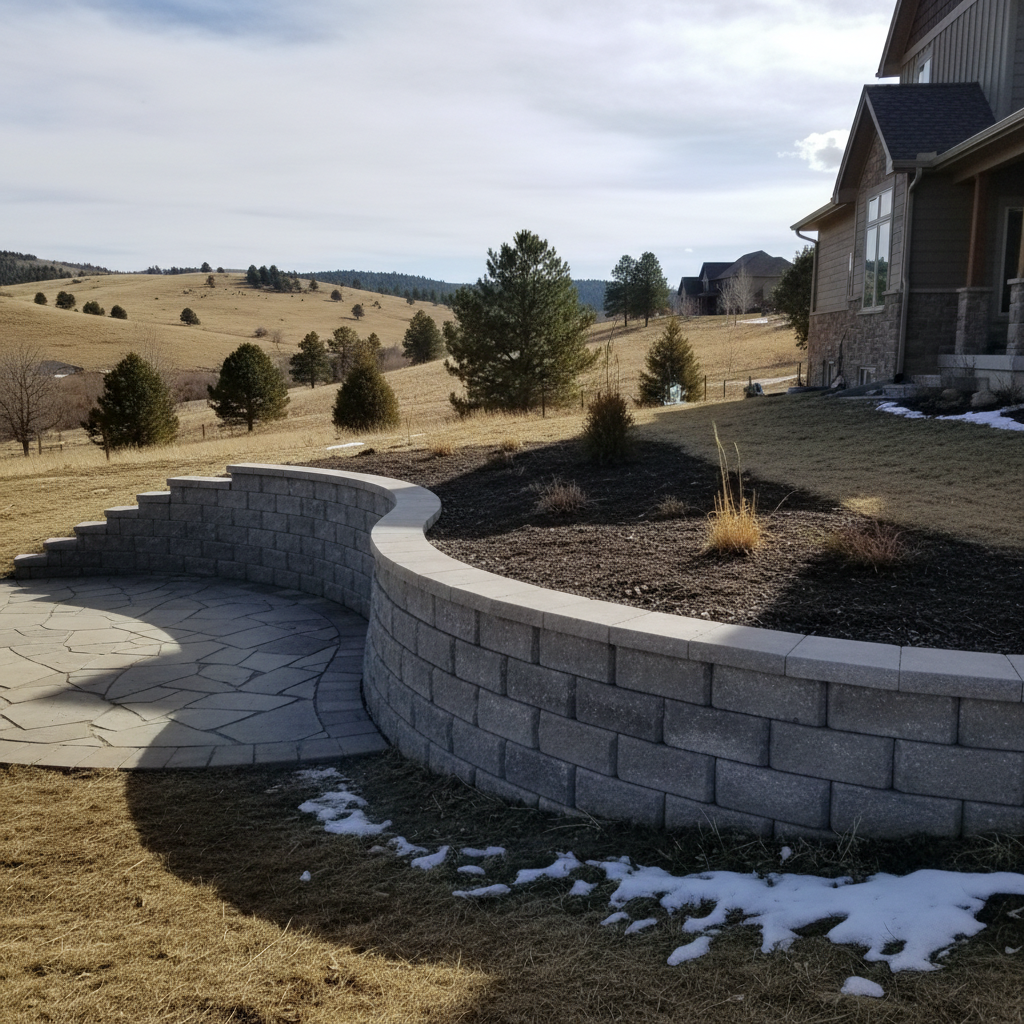
Alright, let us talk about concrete retaining walls here in Sturgis. You have got slopes on your property as well as drainage issues. You want a solid retaining wall that is going to last a long time. That is a smart way to think about it. Getting your concrete retaining wall built right, especially with our crazy Black Hills weather, means knowing when to build it. It also means knowing how to look after it. Building a concrete retaining wall is not just about pouring concrete; it is about pouring it smart. Sturgis Concrete Inc understands these local conditions.
When is the Best Time to Build Your Concrete Retaining Wall?
You might think any time is a good time for a concrete retaining wall project. For concrete, that is just not true. The weather plays a huge role in how well your concrete retaining wall cures. It also affects how long it ultimately lasts. Here in Sturgis, we see some pretty big temperature swings. This means timing is everything for a concrete retaining wall installation.
The Sweet Spot: Spring and Fall for Concrete Retaining Wall Projects
The absolute best times to schedule a concrete retaining wall project are late spring as well as early fall. You want moderate temperatures for your concrete retaining wall. We are ideally looking for daily temperatures that stay between 50 and 70 degrees Fahrenheit. Sturgis has a humid continental climate with four distinct seasons. This means we get those sweet spots for concrete retaining walls.
- Spring (late April to June): The ground is thawing out in Sturgis. It is not scorching hot yet. You have good moisture in the soil. There is not usually excessive rain. This allows the concrete for your retaining wall to cure steadily.
- Fall (September to October): The summer heat has backed off. The ground is still workable before the deep freeze sets in. This is often a great time for a concrete retaining wall because there is less rainfall compared to spring. The cooler temperatures make for better working conditions for our concrete retaining wall team.
Why You Should Avoid Extreme Temperatures for Concrete Retaining Walls
Pouring concrete for a concrete retaining wall is not like baking a cake. You cannot just throw it in any conditions and expect it to come out perfectly. Extreme heat or cold can really mess with the curing process for your concrete retaining wall.
- Hot Weather (July & August): Our Sturgis summers can get warm. July highs often hit the mid-80s. When it is too hot, concrete can dry out too fast. This can lead to cracks as well as reduced strength in your concrete retaining wall. We would have to add more water to the mix. This can weaken the concrete. Our team would also have to work extra hard to keep it cool and moist. This adds to the cost of your concrete retaining wall.
- Cold Weather (November to March): Sturgis winters are no joke. January lows average 15°F. If the concrete freezes before it gains enough strength, the water inside turns to ice. This ice expands and can damage the internal structure of your concrete retaining wall. This makes it weak as well as brittle. The South Dakota DOT even mandates that concrete must be kept above 50 degrees for the first three days after it is poured. It must then be kept above 40 degrees for two more days. That requires special measures like thermal blankets as well as heated enclosures. This again means more cost and complication for your concrete retaining wall project.
It is technically possible to pour concrete for a concrete retaining wall in less-than-ideal conditions. This requires the right precautions. It is always better to aim for those moderate times. This ensures a stronger, more durable concrete retaining wall without unnecessary headaches or expenses. Sturgis Concrete Inc prioritizes the long-term strength of your concrete retaining wall.
Weather Conditions That Affect Concrete Retaining Wall Work
Beyond just temperature, a few other weather factors really matter for a good concrete pour for your concrete retaining wall.
- Precipitation: You need a few dry days after the pour for your concrete retaining wall. Rain or snow can dilute the concrete mix. This makes it weaker. Heavy rain can also make the soil too soft to compact properly. Proper compaction is important for a stable base for your concrete retaining wall.
- Wind: High winds, especially on a hot day, can speed up evaporation from the concrete surface. This can lead to plastic shrinkage cracking in the concrete retaining wall. We will often use windbreaks if it is too breezy during the concrete retaining wall installation.
- Soil Moisture: We have a mix of soil types around Sturgis. This includes rocky as well as clay-rich soil. Clay soils, in particular, hold water. They can expand and contract. For a concrete retaining wall, you want stable, workable soil. Overly wet or frozen ground makes proper site preparation much harder. This includes excavation as well as compaction. This can compromise the stability of the concrete retaining wall.
Protecting Your Concrete Retaining Wall Investment Year-Round
Once your concrete retaining wall is up, you want it to stand strong for decades. Here is how to protect it, especially with our Sturgis freeze-thaw cycles.
Drainage is Important for Your Concrete Retaining Wall
This is probably the most important thing for your concrete retaining wall. Our local climate has heavy spring rains as well as snowmelt. This means water management is very important. If water builds up behind your concrete retaining wall, it creates hydrostatic pressure. This pressure can push the wall over or cause it to crack. Make sure your concrete retaining wall has proper drainage installed. This includes gravel backfill as well as weep holes or drain pipes. Keep those weep holes clear of debris. This is especially important after a big storm or during leaf-shedding season.
Regular Inspections of Your Concrete Retaining Wall
Take a walk around your concrete retaining wall a few times a year. This is especially important after major weather events. Look for these things:
- Cracks: Small cracks can let water in. This water then freezes and expands, making the cracks bigger. Address these cracks promptly.
- Leaning or Bulging: This is a sign of pressure behind the concrete retaining wall. Do not ignore it.
- Erosion: Is soil washing away from the base or around the ends of the concrete retaining wall? This can undermine its stability.
Sealing Your Concrete Retaining Wall
A good quality penetrating sealer is your concrete retaining wall's best friend. It protects against our harsh elements. It gets absorbed into the concrete's pores. This creates a barrier that prevents water from getting inside. This is very important for fighting off those freeze-thaw cycles. These cycles can cause spalling as well as surface damage. We often recommend sealing your concrete retaining wall every few years.
Avoid De-Icing Salts Near Your Concrete Retaining Wall
Be careful with what you use to melt ice near your concrete retaining wall. De-icing salts that contain ammonium nitrates or sulfates can damage concrete. Stick to sand or other concrete-safe alternatives for your concrete retaining wall area.
Manage Nearby Landscaping Around Your Concrete Retaining Wall
Keep an eye on plants as well as trees near your concrete retaining wall. Roots can grow into and damage concrete over time. Also, avoid overwatering plants right next to the concrete retaining wall. This can saturate the soil and increase pressure on the wall.
Here at Sturgis Concrete Inc, we understand the local conditions better than anyone. We know that the frost line here can get pretty deep. It is often a couple of feet, and sometimes even more. That is why proper footings as well as drainage are important for any concrete retaining wall we build. We are not just building walls; we are building them to last through every Sturgis season. If you have questions about your concrete retaining wall or are thinking about putting one in, give us a call. We are always happy to share our knowledge and help you protect your home with a solid concrete retaining wall.