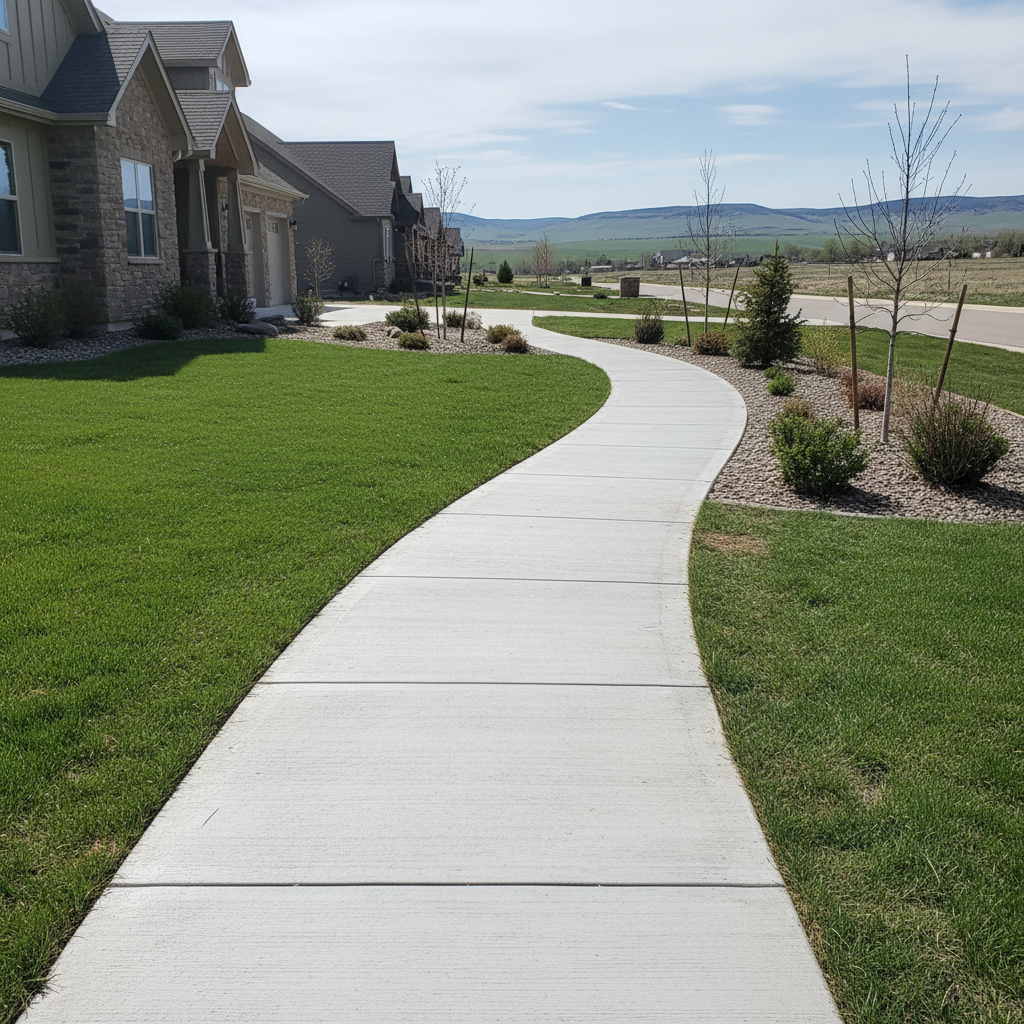
Thinking about new concrete sidewalks? Maybe you're replacing an old, cracked one, or just want a fresh path around your Sturgis home. That's actually a pretty smart move. Good concrete work really boosts curb appeal, makes your property safer, and honestly, it just looks good. But I've watched plenty of folks make some common mistakes that end up costing them more time, more money, and a whole lot of headaches. So, let's chat about what to look out for. That way, you won't regret your sidewalk project later.
Cutting Corners on Prep Work
This is probably the biggest issue, and it's often where contractors try to save a buck to give you a lower bid. Here's the deal: your concrete sidewalk is only as good as what's underneath it. I really can't emphasize that enough. If the ground isn't prepped right, you're going to run into problems. We're talking settling, cracking, and uneven surfaces down the road — sometimes sooner than you'd expect.
So, what does "prepped right" actually mean? It means digging out the area to the correct depth, getting rid of all organic stuff – roots, topsoil, anything that could decompose and leave empty spaces. Then, you need a solid, compacted sub-base. Here in Sturgis, especially with our freeze-thaw cycles and those sometimes-expansive clay soils you find in places like the Bear Butte Valley, a well-drained aggregate base is absolutely crucial. If someone tells you they can just pour concrete straight onto your existing dirt? Walk away. Seriously. They're setting you up for trouble.
Ignoring Drainage
Another huge one, this. Water is concrete's worst enemy if you don't manage it properly. You've got to think about where all that water will go when it rains or when the snow melts. Will your new sidewalk funnel water right toward your foundation? Will it create puddles that freeze in winter, turning your path into an ice rink? Nobody wants that.
A good contractor will plan for proper grading and slope. Even a slight slope, usually about 1/8 to 1/4 inch per foot, is enough to direct water away from your house and off the sidewalk surface. Don't just assume it'll sort itself out. If your contractor isn't talking about drainage early in the conversation, that's a big red flag. You definitely don't want a beautiful new sidewalk that turns into a drainage nightmare.
Not Getting Specific About Reinforcement
You might hear terms like 'rebar' or 'wire mesh.' These things are important. Concrete is super strong when you push on it, but it's not great when you try to pull it apart – that's tension. Reinforcement helps hold it all together, which is especially key with our wild temperature swings.
Some contractors will just toss in a bit of wire mesh and call it good. For a sidewalk, though, you typically want at least 6x6-10/10 welded wire mesh, or even better, rebar. For heavier-duty sidewalks or driveways, rebar is a must. Make sure your quote spells out exactly what kind of reinforcement they'll be using. Don't just accept "reinforced concrete" as an answer. Ask for the specifics. It makes a huge difference in how long your sidewalk lasts.
Forgetting Control Joints (Or Doing Them Wrong)
Concrete cracks. It's just a fact of life, right? The goal isn't to stop every crack, but to control where they happen. That's what control joints are for. These are those saw cuts or grooved lines you see in sidewalks. They create weak spots in the concrete so that when it expands and contracts with temperature changes, or settles a bit, it cracks along those lines instead of randomly across your beautiful new surface. Phew!
I've seen homeowners assume all contractors know this. They don't always. And I've definitely seen contractors space them too far apart, or not cut them deep enough. For sidewalks, you generally want control joints every 4 to 5 feet. They should be cut about a quarter of the depth of the slab. If your contractor isn't talking about control joints, or if their plan has them spaced like they're trying to save a buck on cuts, that's a problem you'll see manifest in ugly, random cracks later on.
Choosing the Cheapest Bid Without Asking Why
Look, I get it. Everyone wants to save money. But when it comes to concrete, the cheapest bid is very rarely the best value. There's usually a reason one bid is significantly lower than the others. It's typically because they're cutting corners somewhere – on prep, on materials, on reinforcement, or on the experience of their crew.
When you get multiple bids, don't just stare at the bottom line. Ask questions. What kind of sub-base do they use? How thick will the concrete be? What reinforcement? How will they handle drainage? What's their plan for control joints? What's their experience with concrete in Sturgis specifically? Our local conditions are unique, and a contractor who understands them is worth their weight in gold. Here at Sturgis Concrete Inc., we lay out all these details for you because we believe in being transparent and delivering quality work that lasts.
Not Checking References or Insurance
This seems obvious, but you'd be surprised how many people skip it. Always ask for references. Call them. Ask about their experience with the contractor. Were they on time? Did they stick to the budget? Was the quality good? Did they clean up afterward?
And for heaven's sake, make sure they're insured. Ask for proof of liability insurance and workers' compensation. If something goes wrong on your property, like an accident or damage, and they're not insured, you could be held liable. It's a simple request that protects you big time.
Ignoring the Curing Process
Once the concrete is poured, the job isn't actually over. Proper curing is vital for strength and durability. Concrete doesn't "dry"; it "cures" through a chemical reaction with water. If it cures too quickly, it won't reach its full strength and will be much more prone to cracking.
A good contractor will explain their curing process. This usually means keeping the concrete moist for several days, either by spraying it with water, covering it with plastic sheeting, or applying a liquid curing compound. If they just pour it and walk away, your concrete won't be as strong as it should be. Ask about their curing plan and make sure they follow through.
Your concrete sidewalk is an investment in your home. Taking the time to understand these common pitfalls and asking the right questions upfront can save you a lot of grief and ensure you get a beautiful, long-lasting result. Don't settle for anything less than a quality job.